Start with these three
The items families buy first.

Moen Ultima Brushed Nickel 24-Inch Designer Bathroom Grab Bar with Curl Grip (LR8724D3BN)
Under Cabinet Lighting, 14.7" Rechargeable Motion Sensor Light Indoor, 2 Pack Magnetic Dimmable
Sonic Bomb Dual Extra Loud Alarm Clock with Bed Shaker, Black | Sonic Alert Vibrating Alarm Clo
Most people arrive here after something
happened. A fall, a near miss, a phone call that did not sound right. You have a weekend, a
budget you have not worked out yet, and a parent who does not want to be managed.
This page is what we would tell a friend in that position. No products
on it — just the order to do things in, and the parts that go wrong.
The first weekend: five things, in this order
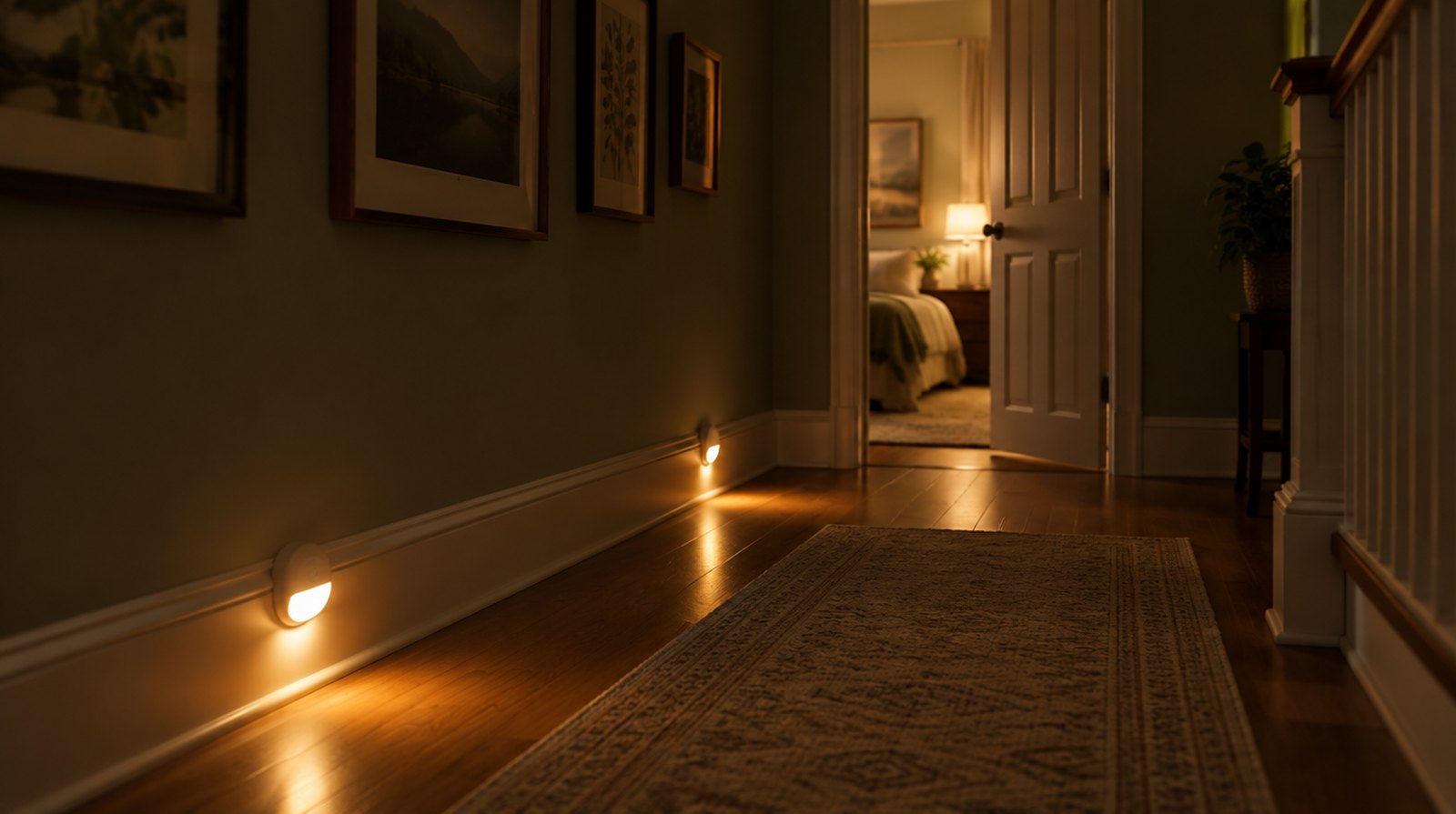
- 1. The path from the bed to the bathroom at 3am. More falls happen on this
one trip than anywhere else in the house. A motion-sensor light at ankle height fixes it for
about twenty dollars and takes two minutes. Start here because it is cheap, invisible, and
nobody has to agree to anything. - 2. Something to hold where they stand up. Beside the toilet and inside the
shower. A properly anchored bar carries real weight; a suction bar is for a rental or a trial and
should never be trusted by someone bearing full weight on it. - 3. Somewhere to sit in the shower. Standing on a wet floor is the longest
balance task of the day. A shower chair removes it entirely. - 4. Traction where the water lands. Inside the tub and on the floor outside it.
- 5. Loose rugs and cords. Free. Do it while you are there, and do not make a
ceremony of it.
How to raise it without making them feel managed
The equipment is the easy part. The conversation is what people actually get stuck on, and
getting it wrong can cost you a year of them refusing everything.
- Lead with the task, not the person. “This shower is slippery” lands
very differently from “you are unsteady.” One is about a room. The other is about
them, and it will be argued with. - Make it about your own peace of mind. “I would worry less” is
honest, hard to refuse, and does not require them to admit anything. - Give them the decision. Bring two options and let them choose. People accept
what they picked and resent what was installed while they were out. - Start with the invisible things. Lighting and non-slip strips do not look
like medical equipment. Grab bars in brushed nickel look like a hotel. Save the visibly clinical
items for when they are actually needed. - Do not do it all in one weekend. A house that transforms overnight feels like
a verdict. Two or three things now, more later.
Buying for a home you do not live in
- Measure before you order. Doorway widths, the height from floor to the top of
the toilet bowl, tub wall height, and total step rise at the entry. Four numbers that eliminate
most wrong purchases. - Check who installs it. Anchored grab bars need studs or proper hollow-wall
anchors. If nobody local can mount it, buy the version that does not need mounting — and be
honest that it holds less. - Ship to them, not to you. Freight items get refused or left on porches. Have
a person there on delivery day for anything large. - Keep the receipts and the boxes for 30 days. Sizing mistakes are common and
returns on bulky items are unforgiving.
When it is not a gadget problem
Some things are not solved by buying anything, and it is worth knowing the difference. Consider
asking a doctor for a referral to an occupational therapist if you see:
- More than one fall in six months, or any fall they did not tell you about
- Furniture walking — moving through a room by holding onto things
- Avoiding stairs, or sleeping downstairs in a chair to skip them
- New confusion about familiar tasks, or medications being missed
- Weight loss, or a fridge with nothing in it
An occupational therapist visits the actual home and recommends specific changes. In the US
this is often covered by Medicare with a physician referral. One visit is usually worth more than
a cart full of equipment, and they will tell you what to skip.
This page is general information for planning, not medical advice, and
nothing here diagnoses or treats any condition. Anything involving a health change belongs with
their doctor.