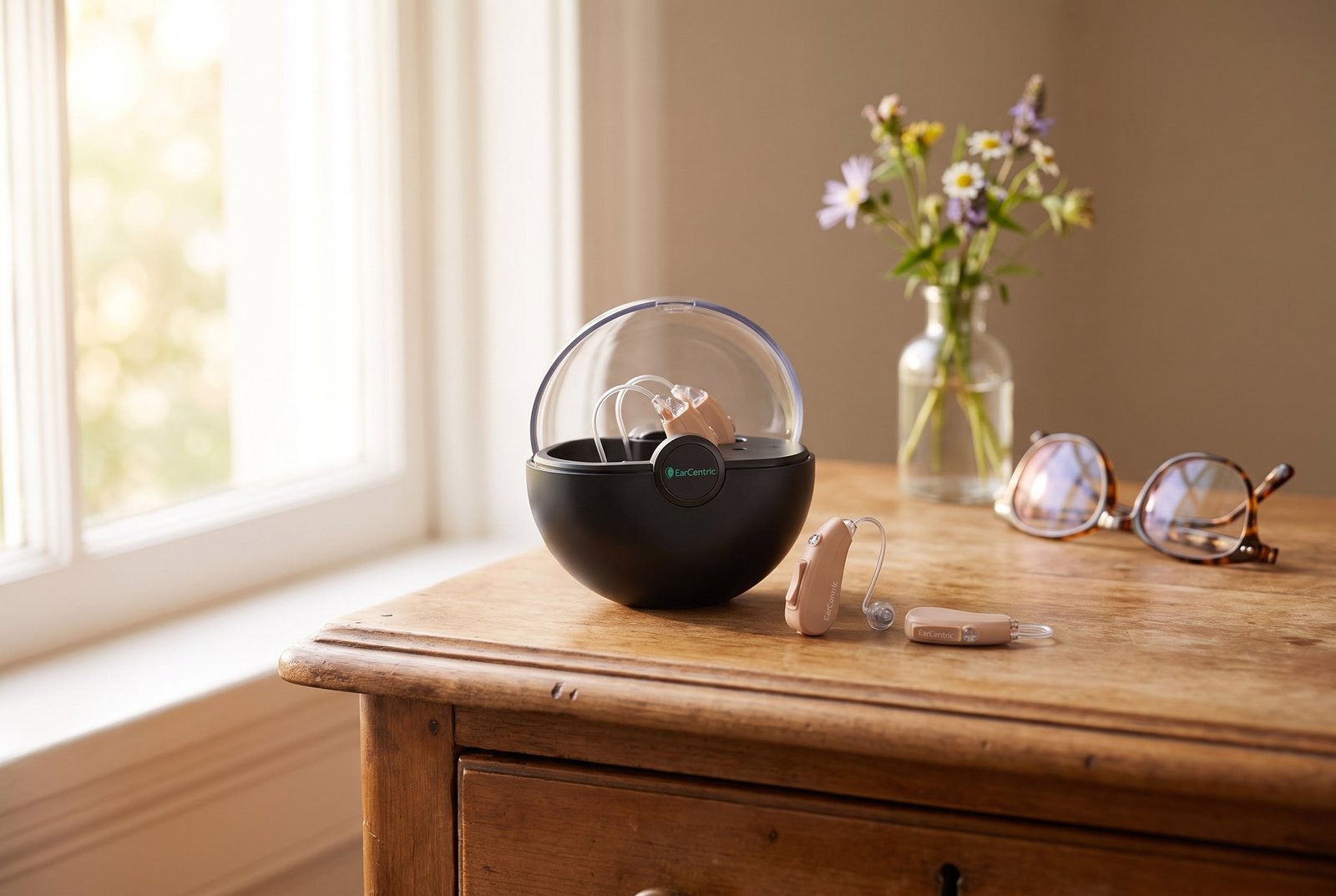
Short on time? Our top pick
EarCentric EasyCharge rechargeable hearing aids
See all our picks and what to check ↓
As an Amazon Associate we earn from qualifying purchases.
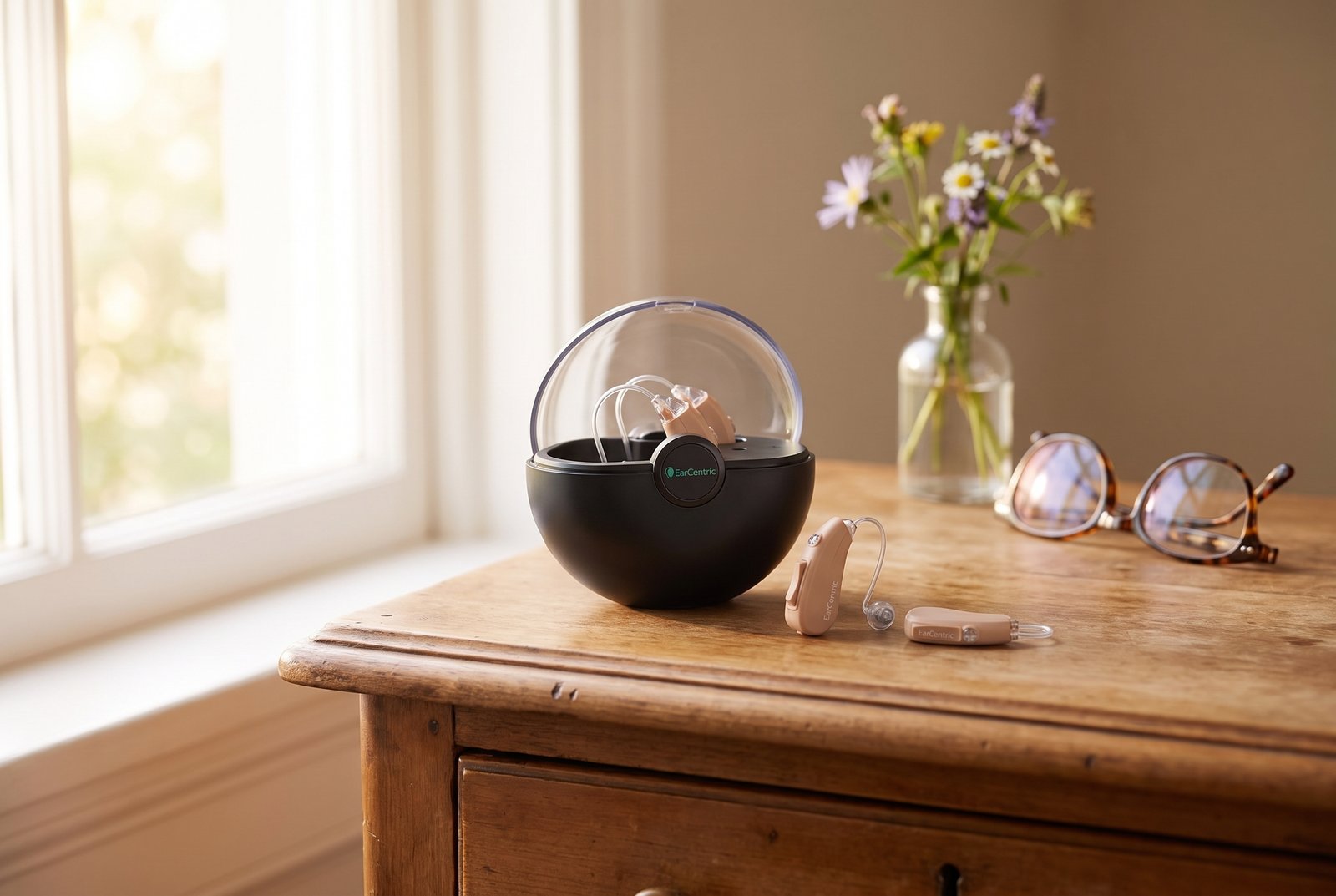
Since 2022, hearing aids for adults with mild to moderate hearing difficulty have been sold over the counter, without a prescription or a fitting appointment. Personal sound amplifiers sit on the same shelf and look similar, but they are a different product: they make everything louder rather than adjusting to a person’s hearing. Both can help; knowing which one you are holding is the first check.
Before you choose an OTC hearing aid or amplifier
- Know the label. A box that says “OTC hearing aid” has been made to a federal standard for adults with mild to moderate hearing difficulty. “Amplifier” or “sound amplifier” means a general-purpose device, not a hearing aid. If hearing has changed suddenly or in one ear only, that is a reason to see a professional first.
- Choose between self-fitting and preset. Self-fitting aids use a phone app and a short hearing check to tune themselves; preset ones come with a few fixed programs. The app route suits a comfortable smartphone user; presets are simpler for someone who wants buttons.
- Check the return window and the battery. Most people need a few weeks to know whether an aid works for them, so a 30-day or longer return policy matters. Rechargeable units drop into a case each night; button-battery units run longer per charge but need tiny batteries changed by hand.
Our picks
Every product here met our stock and owner-rating bar when we published. Prices and availability change constantly — always confirm on the retailer’s own page before buying.